Chimney chase re-clad and capped in copper
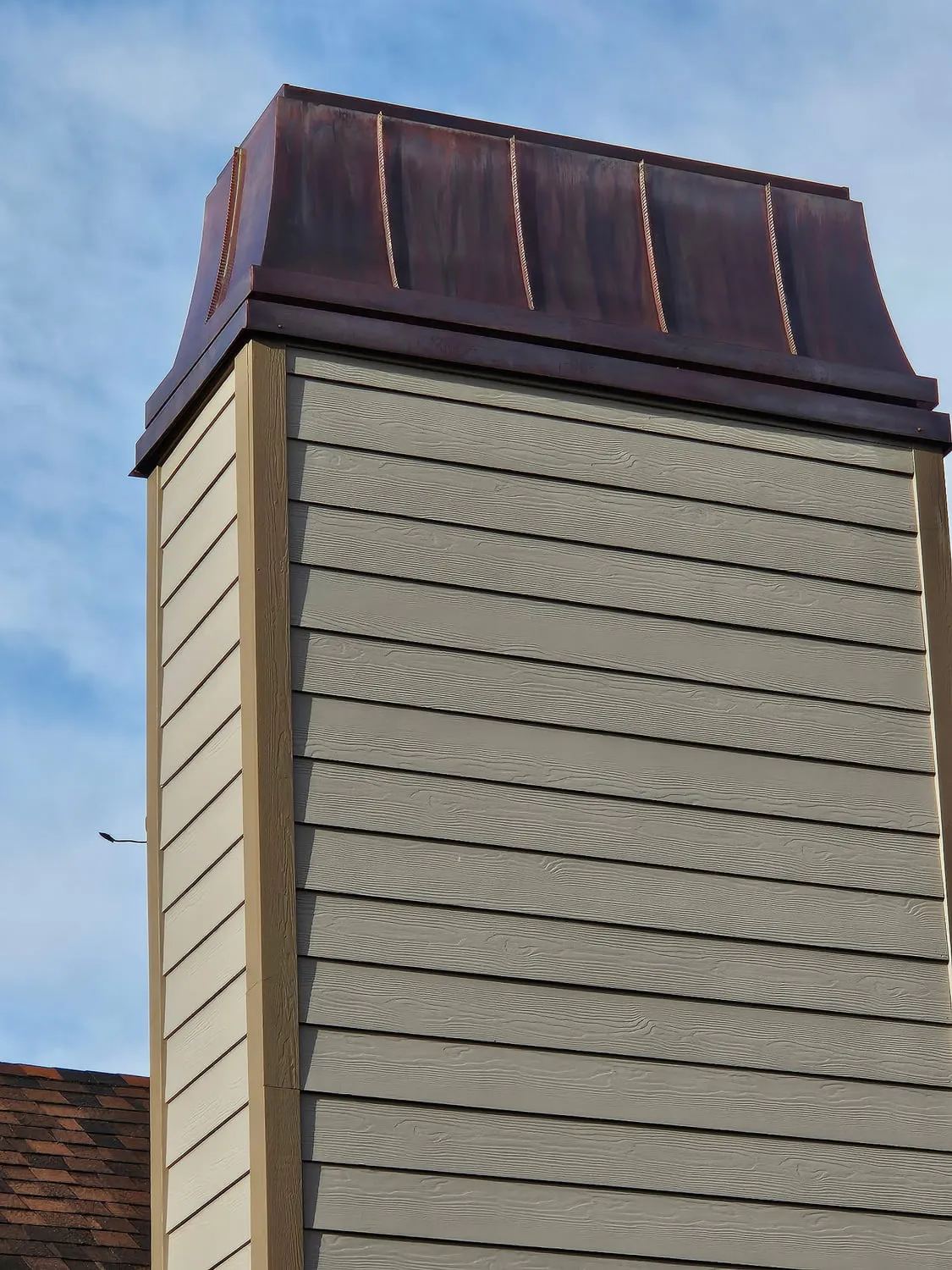
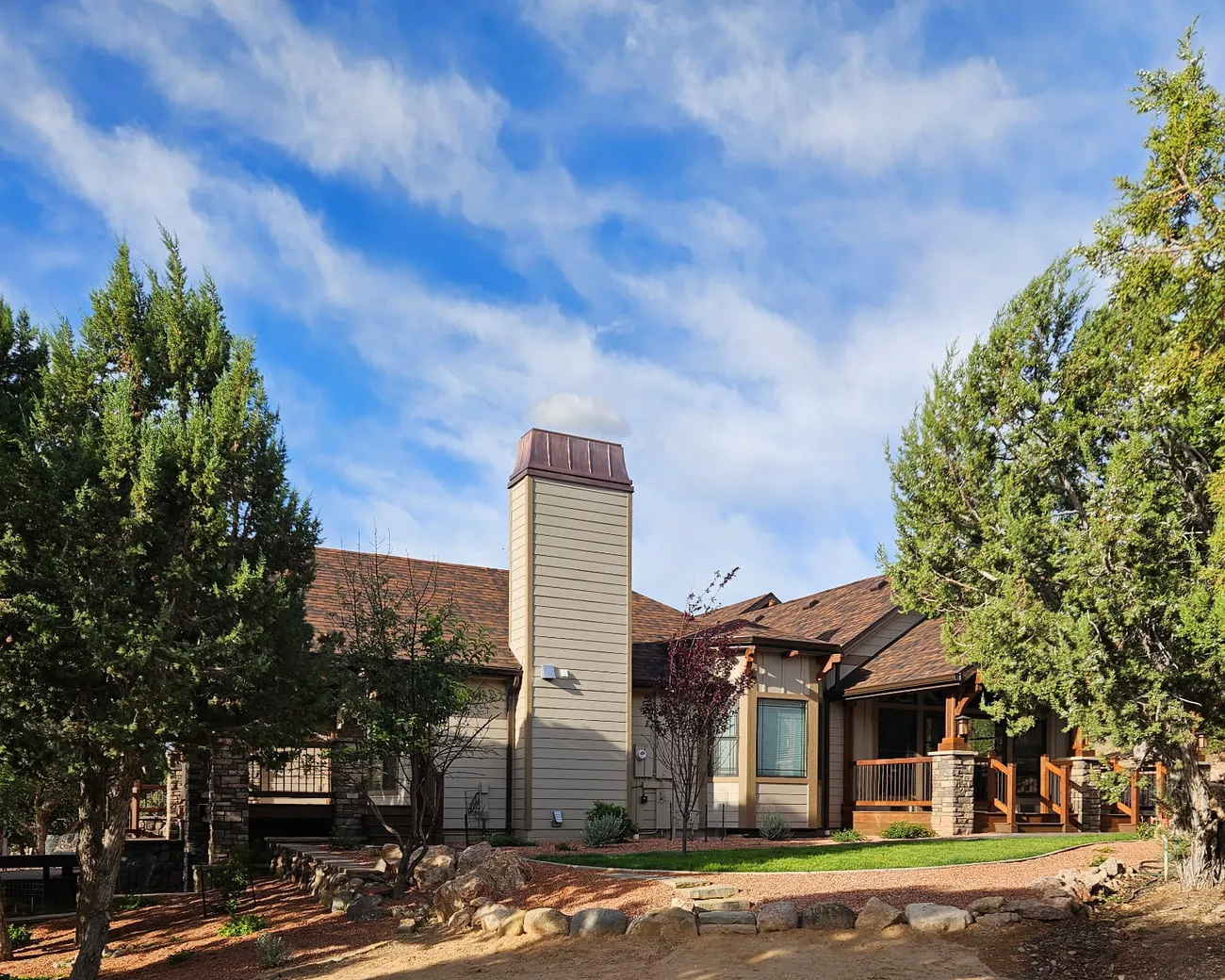
This chimney chase in Washington County, Utah was re-clad in fibre-cement lap siding and capped with a custom copper shroud. A chase is not a masonry chimney — it is a hollow framed and sided box built around a metal factory-built flue, and nearly every chase leak starts at the cap, because a flat or badly flashed cover holds standing water immediately above wood framing. Sloping the cap and lapping the flashing correctly is what stops the problem being seasonal.
What a chimney chase actually is
A chimney chase is the framed, sided box that encloses a metal factory-built fireplace flue on the outside of a house. It looks like a chimney from the street and it is nothing like one structurally: it is hollow wood framing, sheathed and sided, with a sheet-metal cover on top.
That distinction decides everything about how it fails. Masonry chimneys fail slowly, from mortar. Chases fail from the top, quickly, into wood.
Why the cap is where it starts
A flat cap holds standing water. Water sits on it, finds the seams or the fastener penetrations, and goes straight into framing that has no way to dry. Because the damage happens inside a sealed box, it is usually well advanced before anything shows on a ceiling below.
A cap that works has three properties:
- Slope, so water leaves rather than sits.
- A drip edge that stands off the siding, so water leaves the cap and clears the wall instead of running back under it.
- Flashing lapped in the right order — each layer over the one below, so gravity is working with the detail rather than against it.
Why copper
Copper is not decorative here, although it looks it. A copper shroud will not rust through and it will not need repainting, so the part of the assembly that is hardest and most dangerous to get back to is also the part that stops needing attention. It patinas from bright to brown to green and keeps working the whole time.
Galvanised steel is cheaper and entirely serviceable, but it is a cap you will be revisiting.
More from this job
The trades in this job
Tell me what needs doing.
Describe the job and send a photo if you have one. The person who reads it is the person who will do the work.