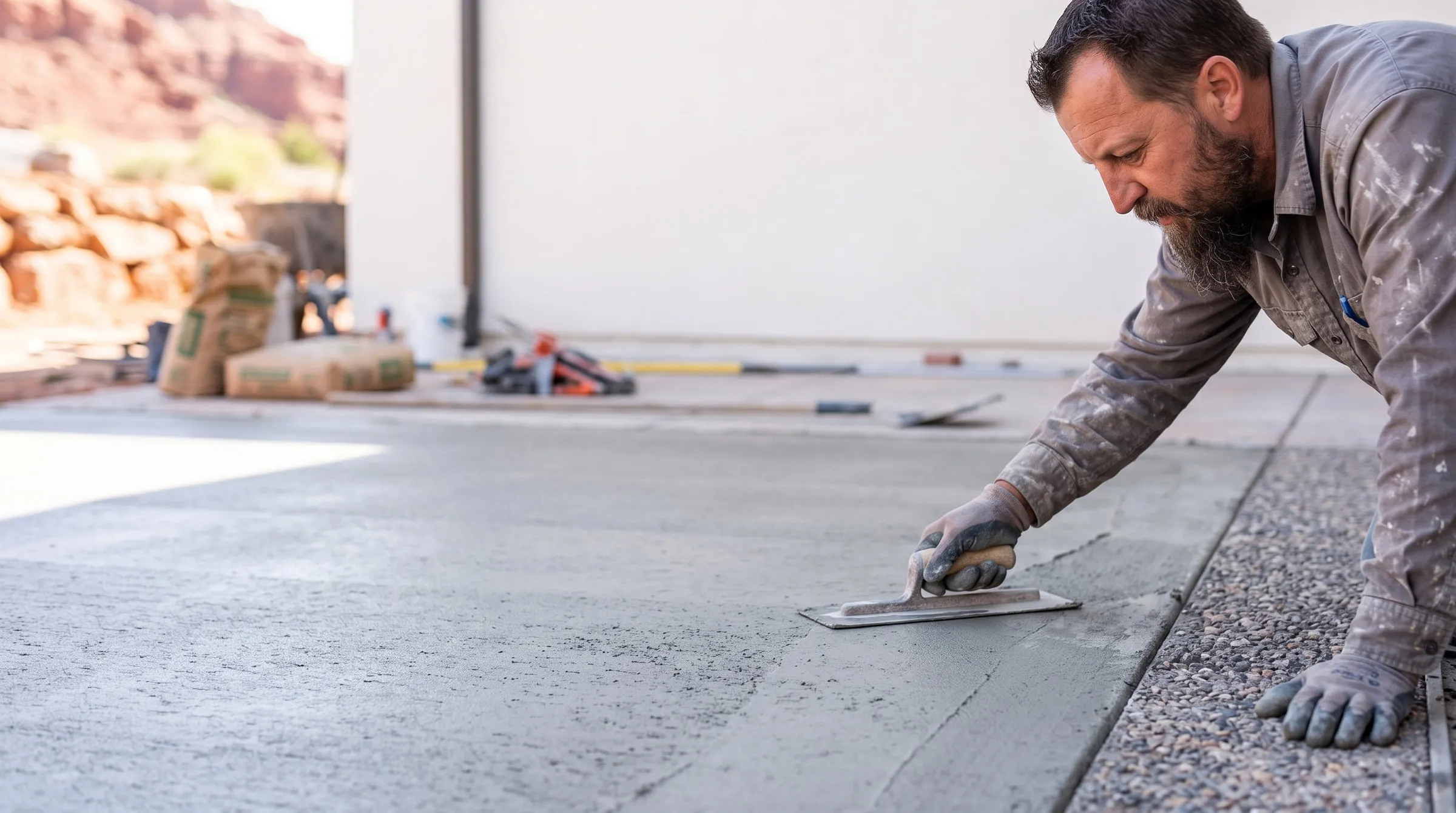
Concrete finishing in St. George and Washington County, Utah
I. Noah Guy Handyman Services forms, pours and finishes residential concrete in St. George, Washington and Hurricane, Utah — patios, walkways, steps, slabs and equipment pads. In this climate the schedule is part of the craft: from June into September a pour starts early in the morning, because concrete placed on a 110°F afternoon loses its water to the air before it can be finished properly.
The heat is a scheduling constraint, not a detail
St. George sits at about 2,860 feet on the edge of the Mojave Desert and it is the hottest city in Utah. From June into September, afternoon highs above 100°F are ordinary rather than exceptional.
That changes concrete work in specific ways:
- Set time shortens. There is less working time between placing and finishing, which means smaller pours and more hands ready before the truck arrives, not after.
- Water leaves the mix. Concrete cures by chemical hydration, and it needs that water. In hot, dry, moving air, water evaporates off the surface instead, which gives crazing on top and a weaker slab underneath.
- The surface can crust while the body is still soft. Trowel that and you seal water in below the crust, which is how a slab ends up delaminating later.
Which is why summer pours start early, the mix is kept as cool as practical, and the slab gets kept wet while it cures rather than being left to dry in the sun. Low humidity makes all three matter more here than they would at the same temperature somewhere humid.
Ground preparation is most of the job
Flatwork fails from underneath. The grade has to be compacted, uniform, and at the right depth, and the forms have to be straight, braced and set to the slope you actually want water to run.
Everything visible in a finished slab — whether the edges are crisp, whether a radius is a true arc or a series of flats, whether water drains or ponds — was decided before any concrete arrived.
Finishes, and where each belongs
- Broom finish — dragged to leave fine ridges. Correct for anything outdoors that gets wet: driveways, walks, patios, steps, pool surrounds.
- Steel trowel — smooth and dense. Correct for a garage, shop or interior slab. Genuinely slippery wet, so it does not belong on an outdoor walking surface.
- Tooled edges and radius corners — a rounded, hardened edge instead of a square arris. It resists chipping and it is the most visible sign of whether flatwork was finished carefully.
What is not offered
Stamped concrete, integral colour and exposed-aggregate decorative finishes are not part of this work. They are a genuine specialism with their own tooling and their own failure modes, and the right move is to hire someone who does them daily.
Concrete Finishing — the real thing
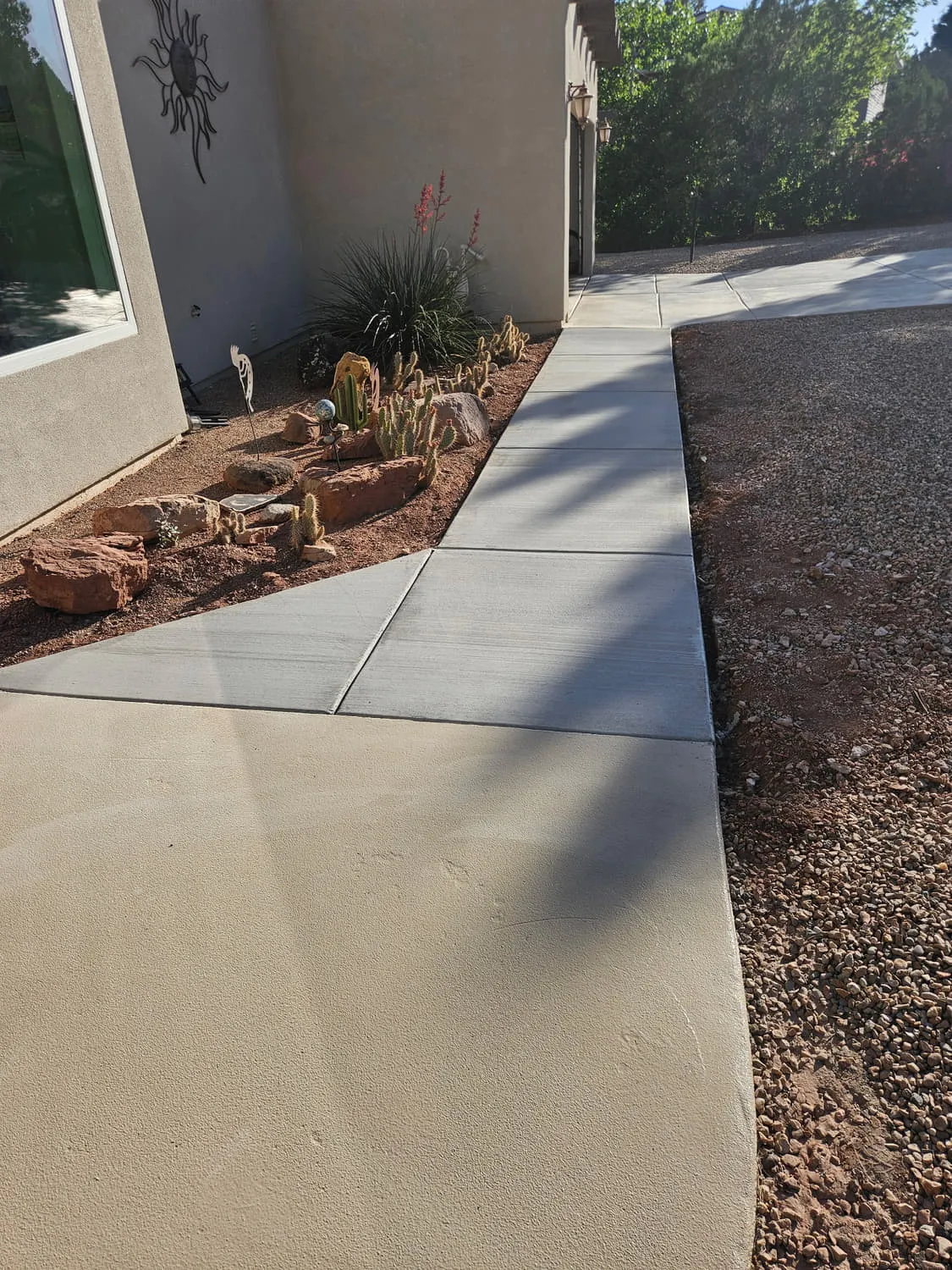
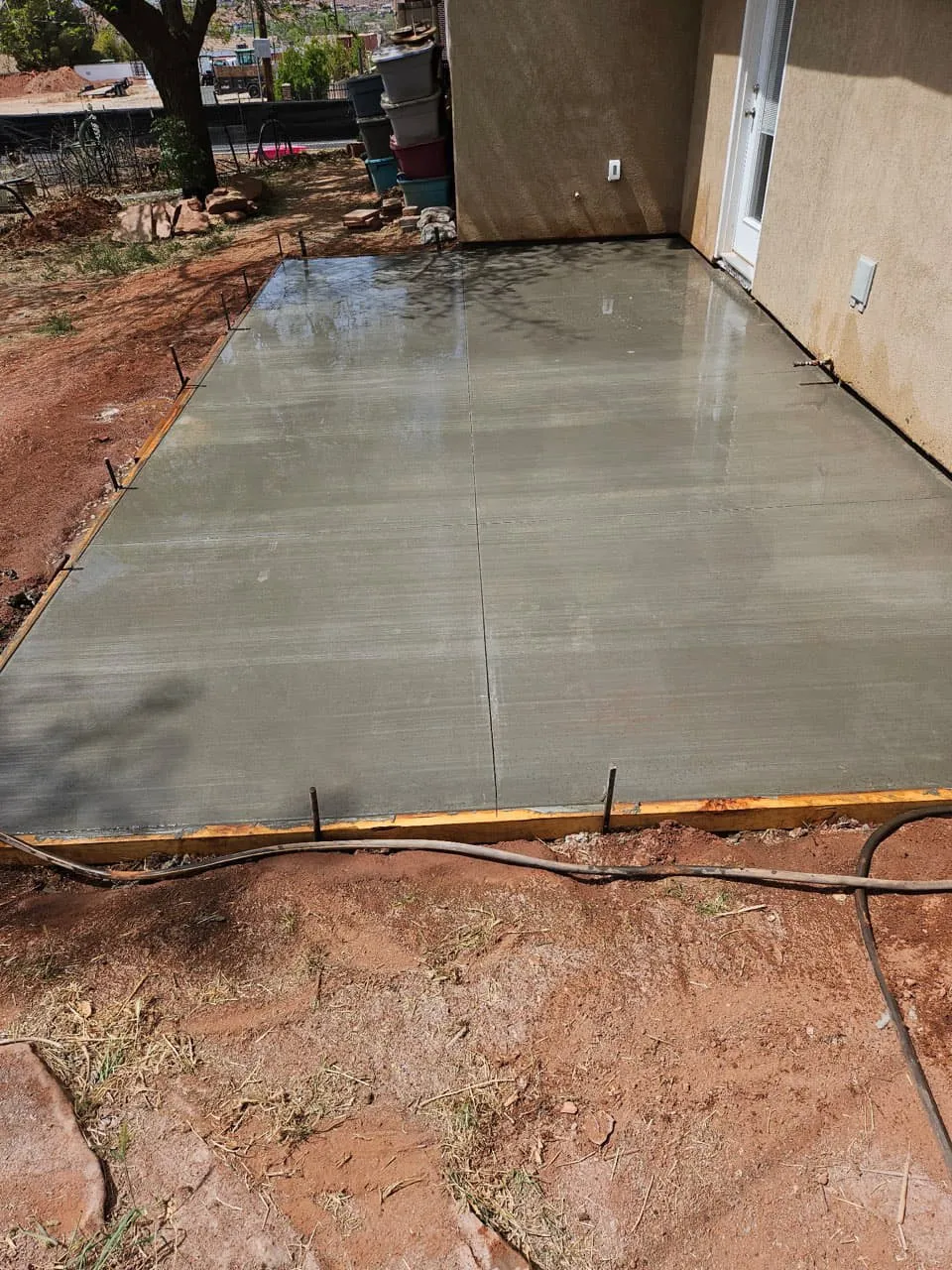
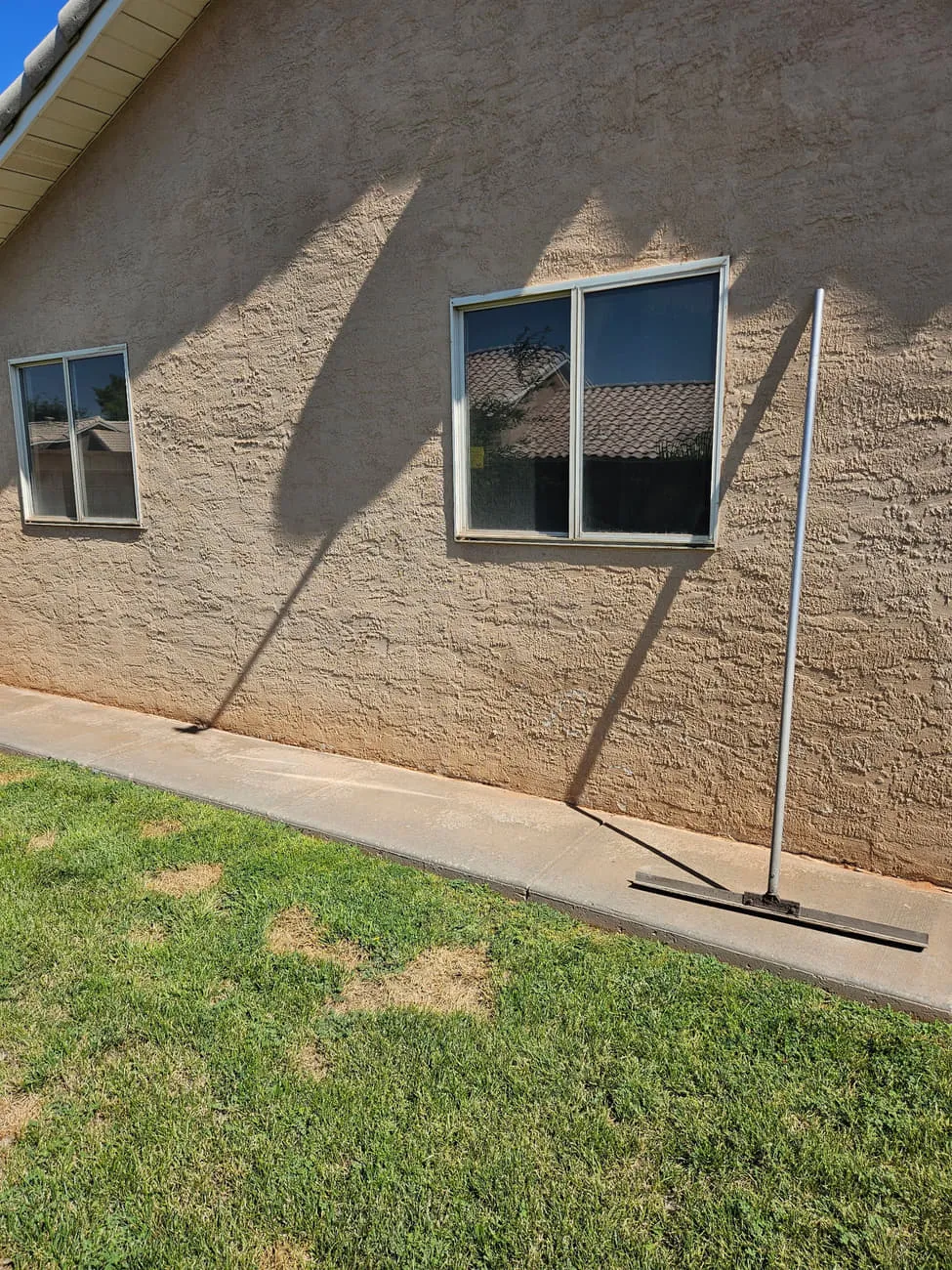
Concrete Finishing — questions
When can concrete be poured in St. George in the summer?
Early morning, from roughly June through September. St. George is the hottest city in Utah and regularly runs past 100°F. Hot concrete sets faster, gives up its water to the air instead of using it to cure, and leaves you with a surface that crazes and a slab that ends up weaker than it should be. The recognised practice in these conditions is to place early, keep the mix cool, and cure it wet.
How long before you can walk on it, or park on it?
Walk on it the next day. Keep vehicles off a driveway or parking pad for a week, and preferably longer. Concrete keeps gaining strength for weeks — it reaches most of its design strength around 28 days — so the wait is not arbitrary caution.
Will the slab crack?
Concrete shrinks as it cures, so it will crack somewhere — the work is deciding where. Control joints, cut or tooled at sensible spacing, give it a straight line to crack along below the surface, which is why they are there and why their spacing is not decorative.
What is the difference between a broom finish and a troweled finish?
A broom finish is dragged with a stiff broom to leave fine ridges, which is what you want anywhere that gets wet or slopes — driveways, walkways, pool surrounds. A steel-troweled finish is smooth and hard, right for a garage or a shop floor, and genuinely slippery when wet, so it does not belong outdoors where people walk.
Do you do stamped or coloured concrete?
Not currently. The work shown here is grey flatwork with broom and troweled finishes, formed edges, tooled radiuses and cut joints. Stamped, integrally coloured and exposed-aggregate decorative work is a different specialism and is worth hiring someone who does it every day.
Can new concrete be poured up against my existing slab?
Yes, and it should be separated from it rather than bonded to it. The two slabs will move independently, so the joint between them needs to allow that. Poured tight against an existing slab with no separation, one or both of them will crack at the junction.
Related
Tell me what needs doing.
Describe the job and send a photo if you have one. The person who reads it is the person who will do the work.