
Laminate and vinyl-plank flooring installation in St. George, Utah
I. Noah Guy Handyman Services installs laminate and luxury vinyl plank flooring in St. George, Washington, Ivins and Hurricane, Utah — over a concrete slab or over a plywood subfloor. Joe Denter does the tear-out, the underlayment, the layout, the door-jamb undercuts, the transitions and the base shoe himself, which is the part of a floating floor that decides whether it looks installed or looks laid down.
Laminate, LVP or engineered — what actually differs
| Laminate | Luxury vinyl plank (LVP) | Engineered hardwood | |
|---|---|---|---|
| What the surface is | Melamine over printed paper | Clear vinyl wear layer | Real wood veneer |
| Core | High-density fibreboard | Solid vinyl or rigid composite | Plywood |
| Bathroom or laundry | No | Yes | No |
| Over a bare slab | Needs vapour-barrier underlayment | Needs vapour-barrier underlayment | Needs a moisture test first |
| Can be refinished | No | No | Once, sometimes twice |
| Underfoot | Harder, louder | Softer, quieter | Closest to solid wood |
| Scratch resistance | Best of the three | Good | Weakest of the three |
The short version: LVP anywhere water might sit, laminate for bedrooms and living areas where you want the hardest wear surface, engineered when you specifically want real wood underfoot and the slab moisture tests dry.
Why the slab matters more here than elsewhere
Almost every house in Washington County is slab-on-grade — no crawlspace, no basement, concrete straight onto the ground. Concrete wicks moisture upward continuously, and the fact that the surface feels dry says very little about what is moving through it.
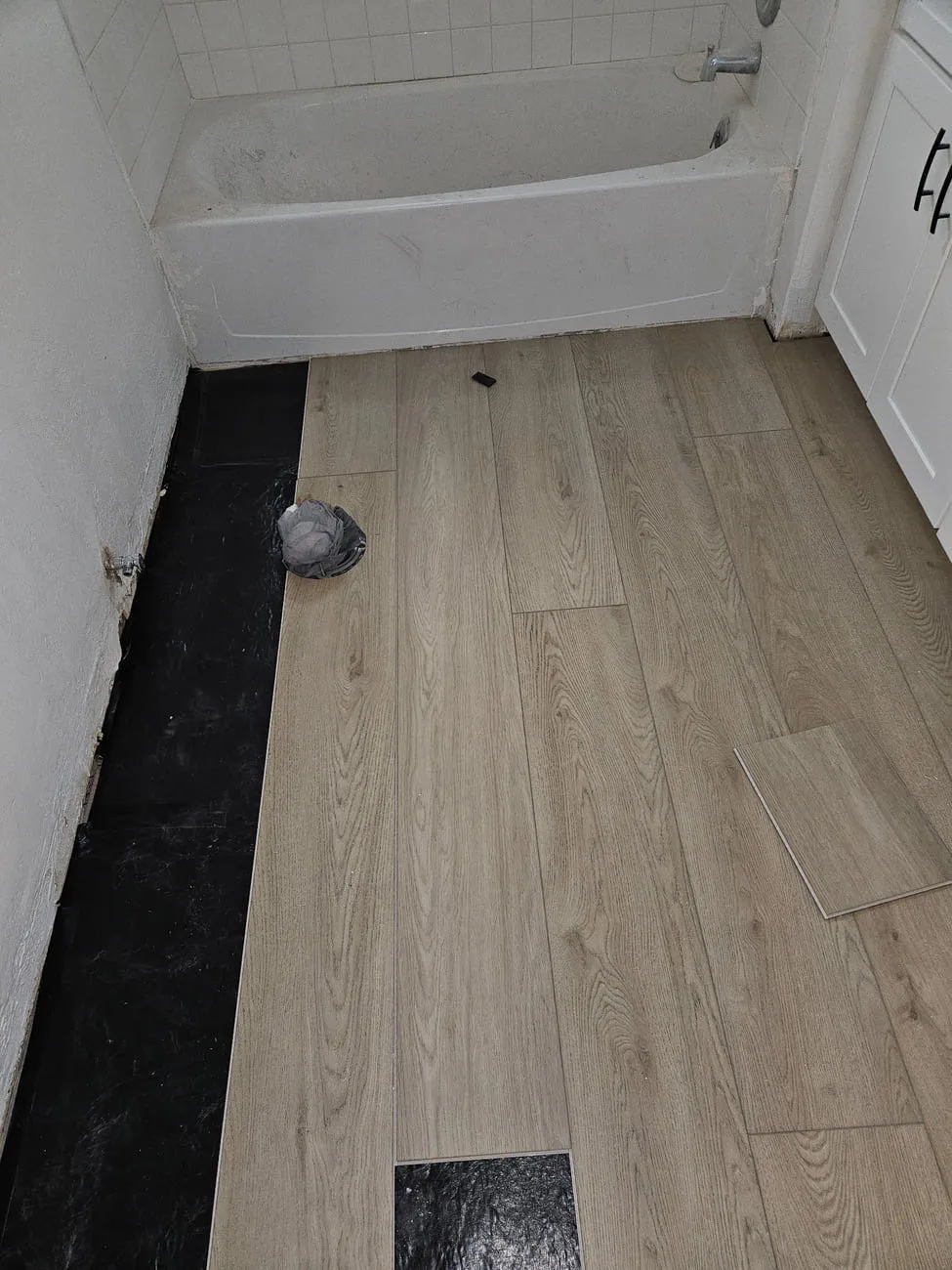
A floating floor over a slab therefore needs a vapour barrier, and the failure mode when it doesn’t have one is delayed. The floor looks perfect for months, then the seams begin to lift and cup. By that point the cause is hard to prove and the fix is a new floor.
The parts of the job that show
Three details separate an installed floor from a laid-down one, and all three are labour rather than material:
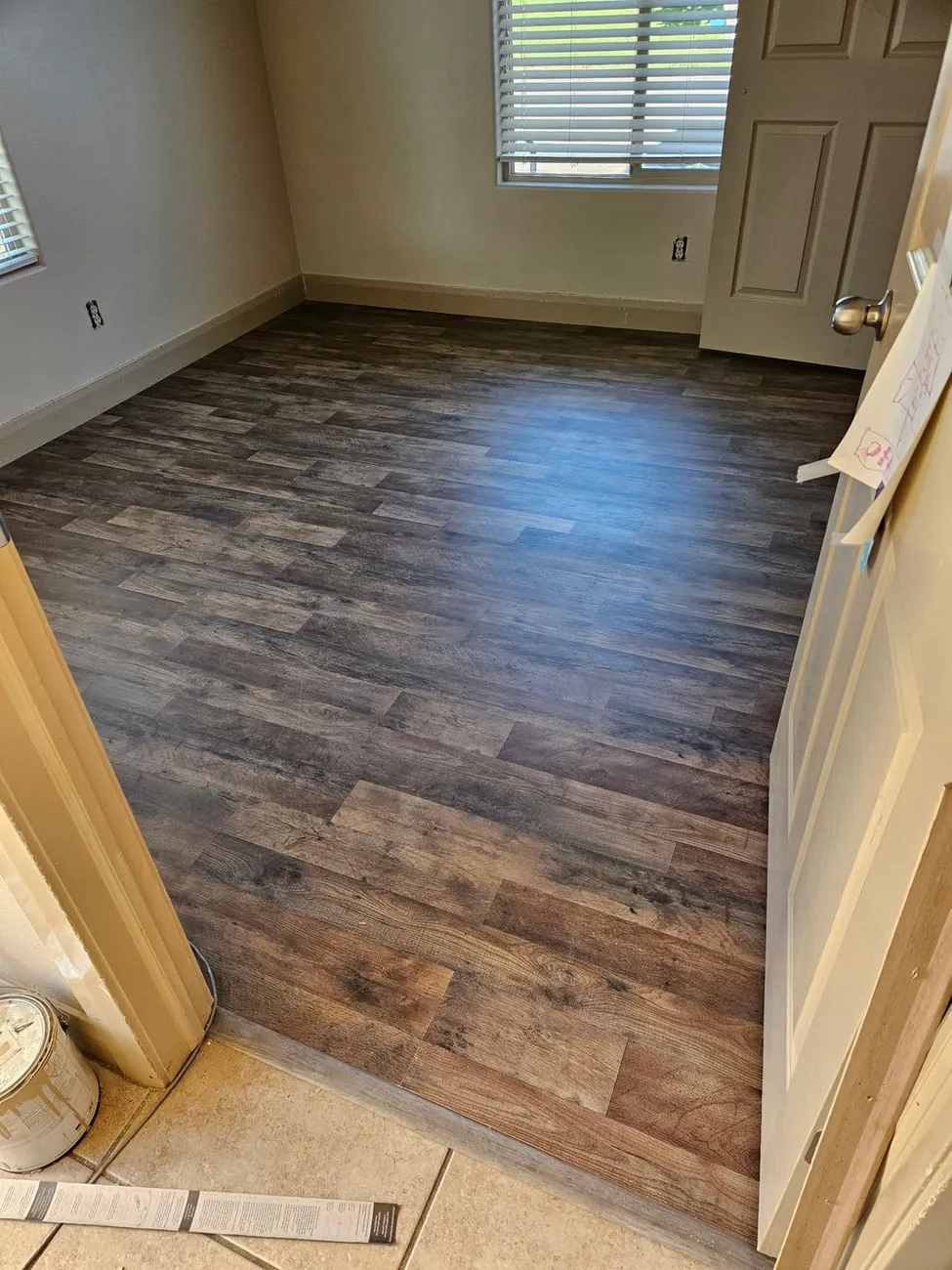
- Undercut jambs. The plank runs under the door jamb and casing. The alternative — butting up to the casing and covering the gap with a T-moulding — is faster and always looks like a shortcut.
- A real expansion gap at every wall, about a quarter inch, hidden by the base shoe. A floating floor has to be able to move. Pinned tight to the wall it buckles in the middle of the room.
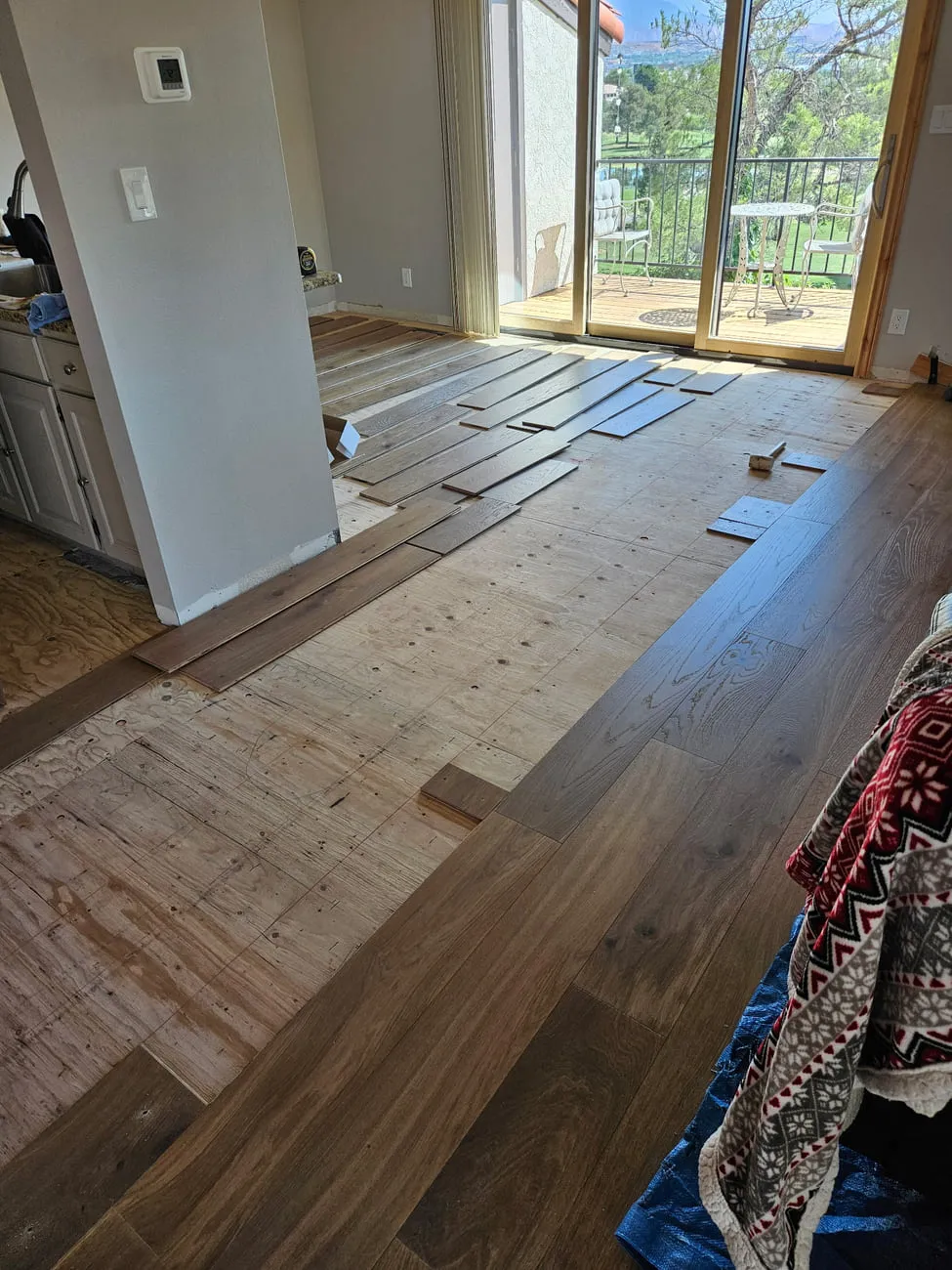
- Racked layout. End joints staggered properly and no short piece landing against a doorway. This costs nothing but planning.
What a typical room involves
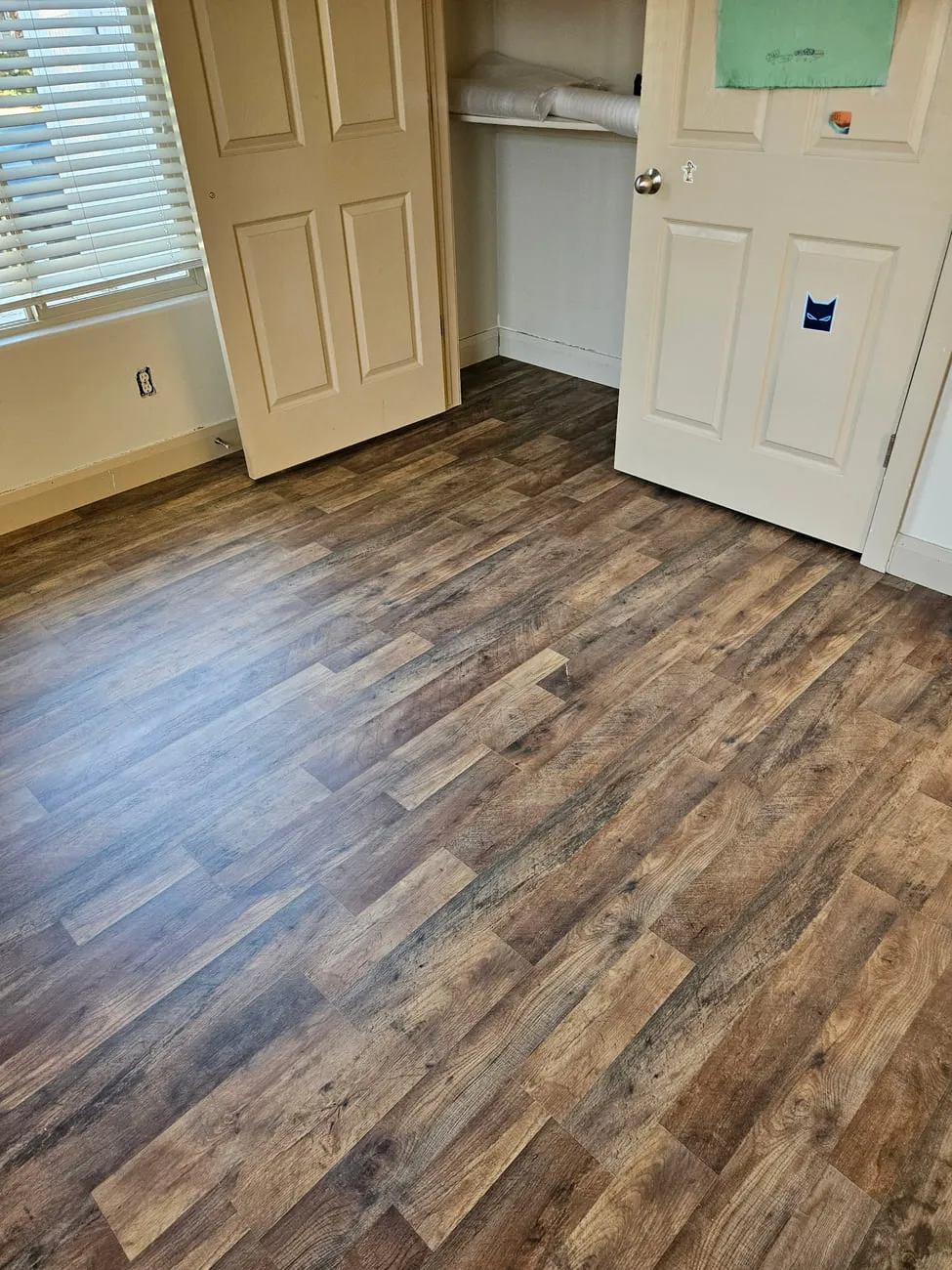
A 300-square-foot bedroom and closet, in laminate, over a slab, with the old floor out, underlayment down, jambs undercut, transitions fitted and the base shoe reinstalled, is a one-day job for one person.
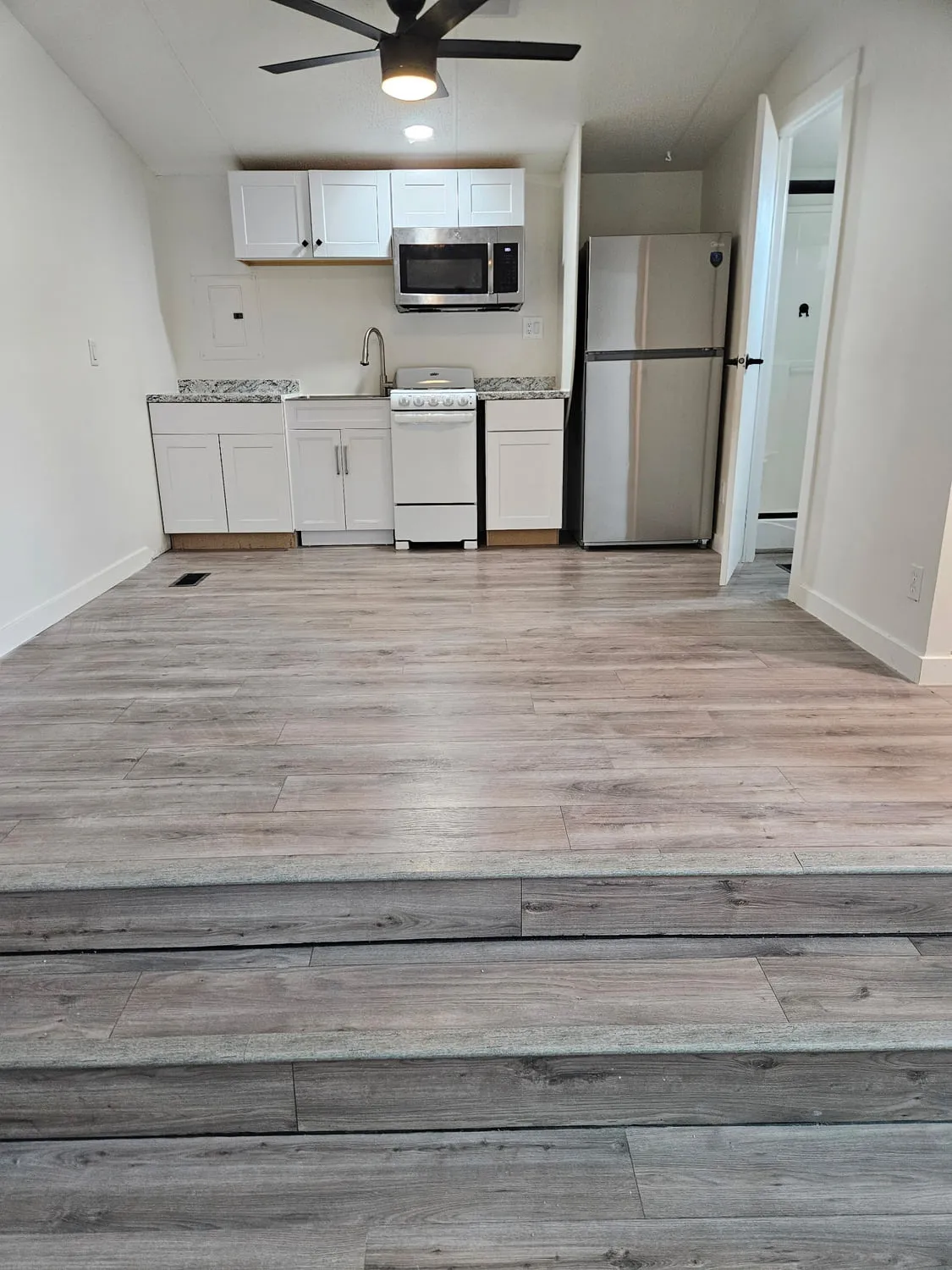
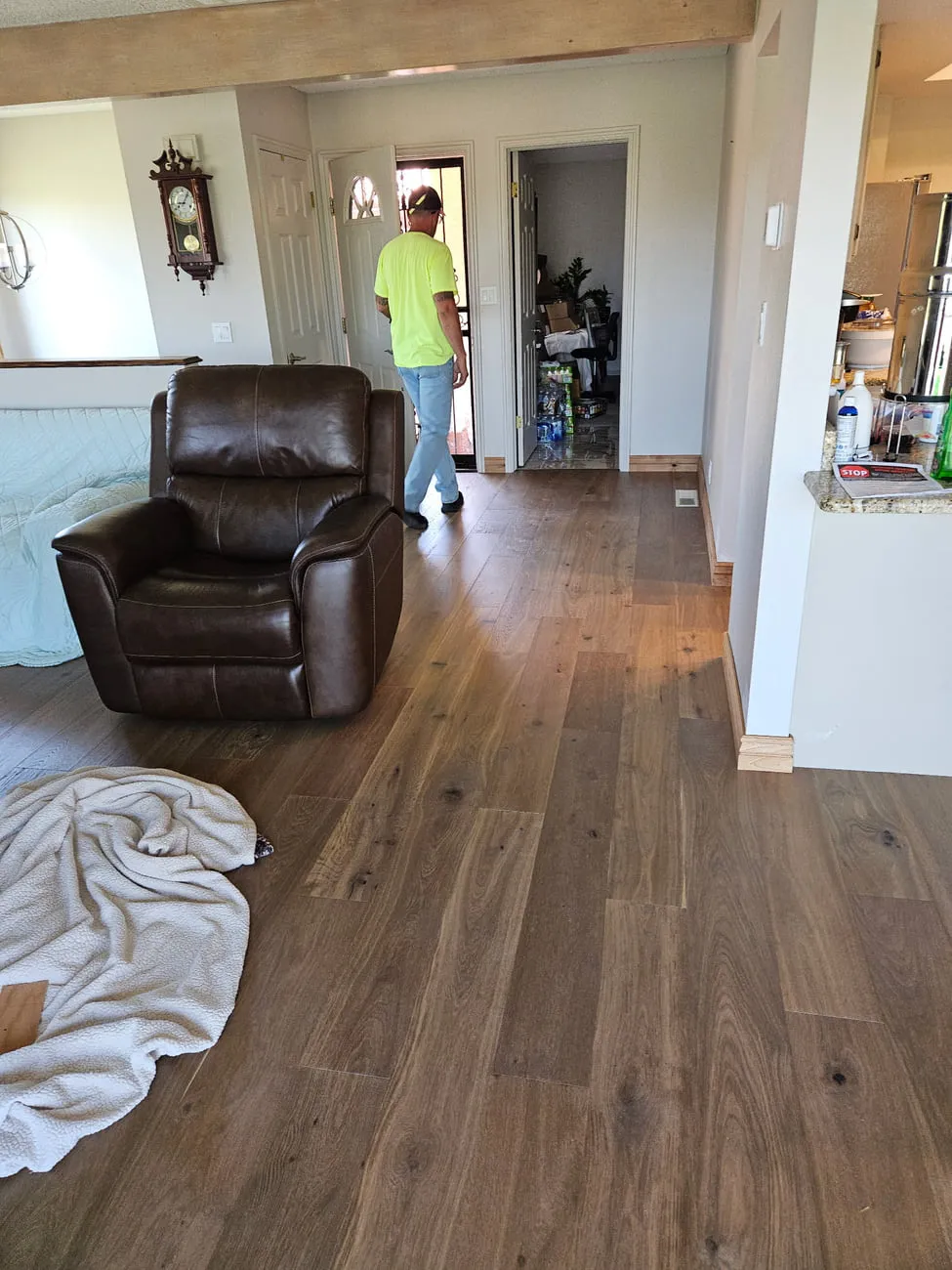
Laminate & Vinyl-Plank Flooring — the real thing
Laminate & Vinyl-Plank Flooring — questions
Can laminate go straight onto a concrete slab?
Yes, with a vapour-barrier underlayment between the two. Nearly every house in Washington County is slab-on-grade, and a slab moves moisture upward even when it feels bone dry. Laminate with no vapour barrier under it will cup and swell at the seams — usually months later, which makes the cause easy to misdiagnose.
What is the difference between laminate and luxury vinyl plank?
Laminate has a printed paper layer under a hard melamine wear surface and a fibreboard core, so it is harder underfoot and it does not belong anywhere that gets standing water. LVP is vinyl the whole way through with a clear wear layer on top, so it is waterproof and quieter, and it is the right choice for a bathroom or a laundry. Neither one can be refinished.
Do the doors have to come off?
The doors stay, but the jambs get undercut so the flooring runs underneath them instead of stopping at them with a T-moulding. It takes a few extra minutes per opening and it is the single clearest difference between a floor that looks installed and one that looks laid down.
Does the baseboard have to come off?
Not usually. A floating floor needs an expansion gap at every wall, and the normal way to cover it is to remove and reinstall the base shoe rather than the baseboard itself. If there is no shoe, then the baseboard comes off and goes back on.
How long does a floating floor need to sit before installation?
Most manufacturers want the planks in the room they are going into for 48 hours before they go down, still boxed, so they reach the temperature and humidity they will live at. In this climate that acclimation matters more than it does in most places, and skipping it is a common cause of gapping later.
Can you install over existing tile or vinyl sheet?
Sometimes. A floating floor needs a flat, sound, dry base — if the tile is well bonded and reasonably flat it can stay, which saves a day of demolition and a dumpster. If it is hollow-sounding, cracked, or badly out of level it comes out. That is a decision to make by looking at it, not in advance.
Related
Tell me what needs doing.
Describe the job and send a photo if you have one. The person who reads it is the person who will do the work.