Farmhouse fireplace — bare brick firebox to thin-brick surround and mantel
This farmhouse fireplace in Washington County, Utah started as a bare brick firebox in a blotch-patched plaster wall with no mantel at all, and finished as a full-height thin-brick surround with a hand-built stained mantel shelf. The sequence matters more than it looks: the mantel had to be anchored into structure behind the wall before the veneer went on, because a mantel decided on after the brick is set is a much harder job than the same mantel decided on before.
3 stages
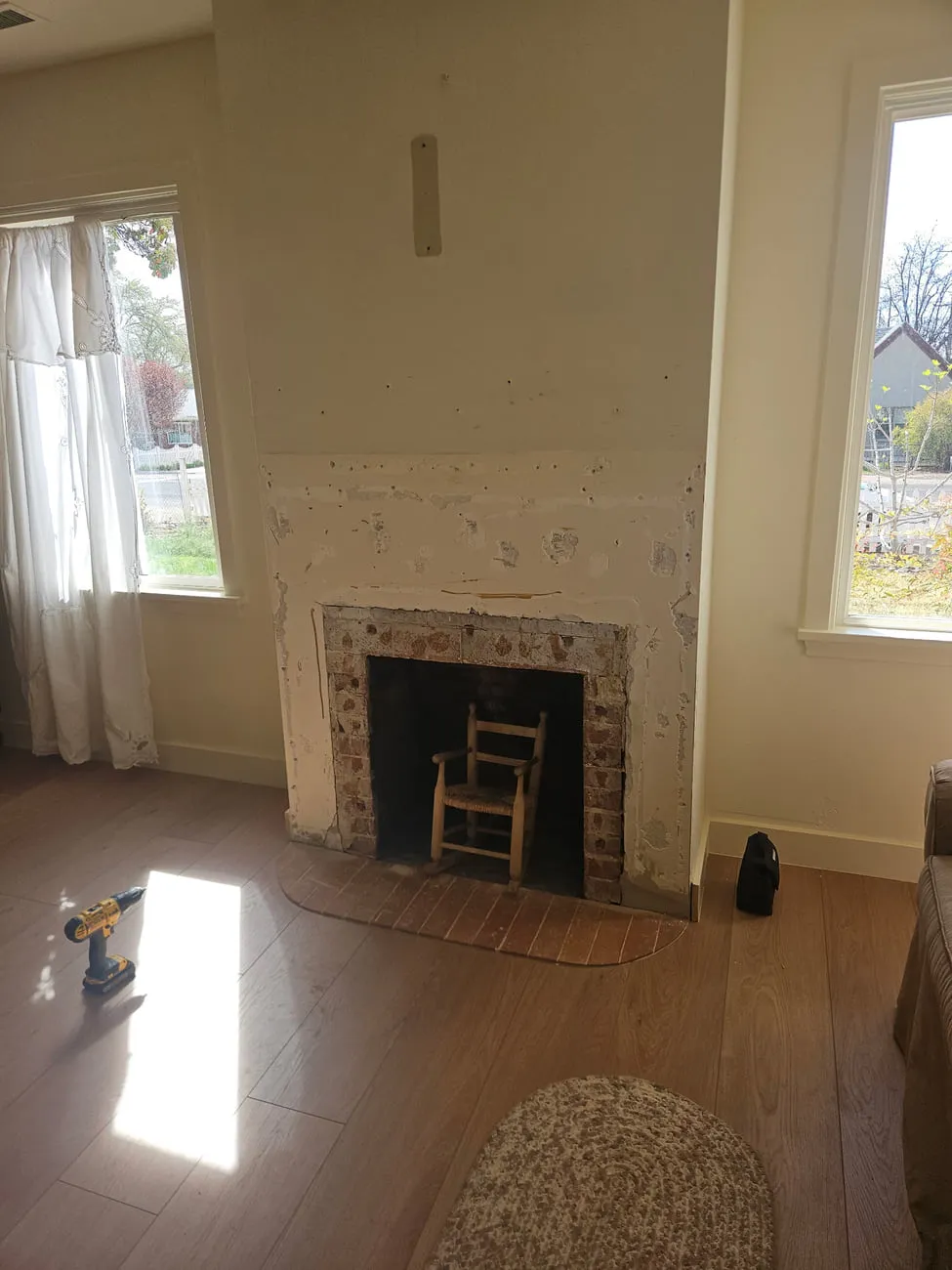 1. Before
Plaster stripped back and patched, no mantel, nothing to anchor to yet.
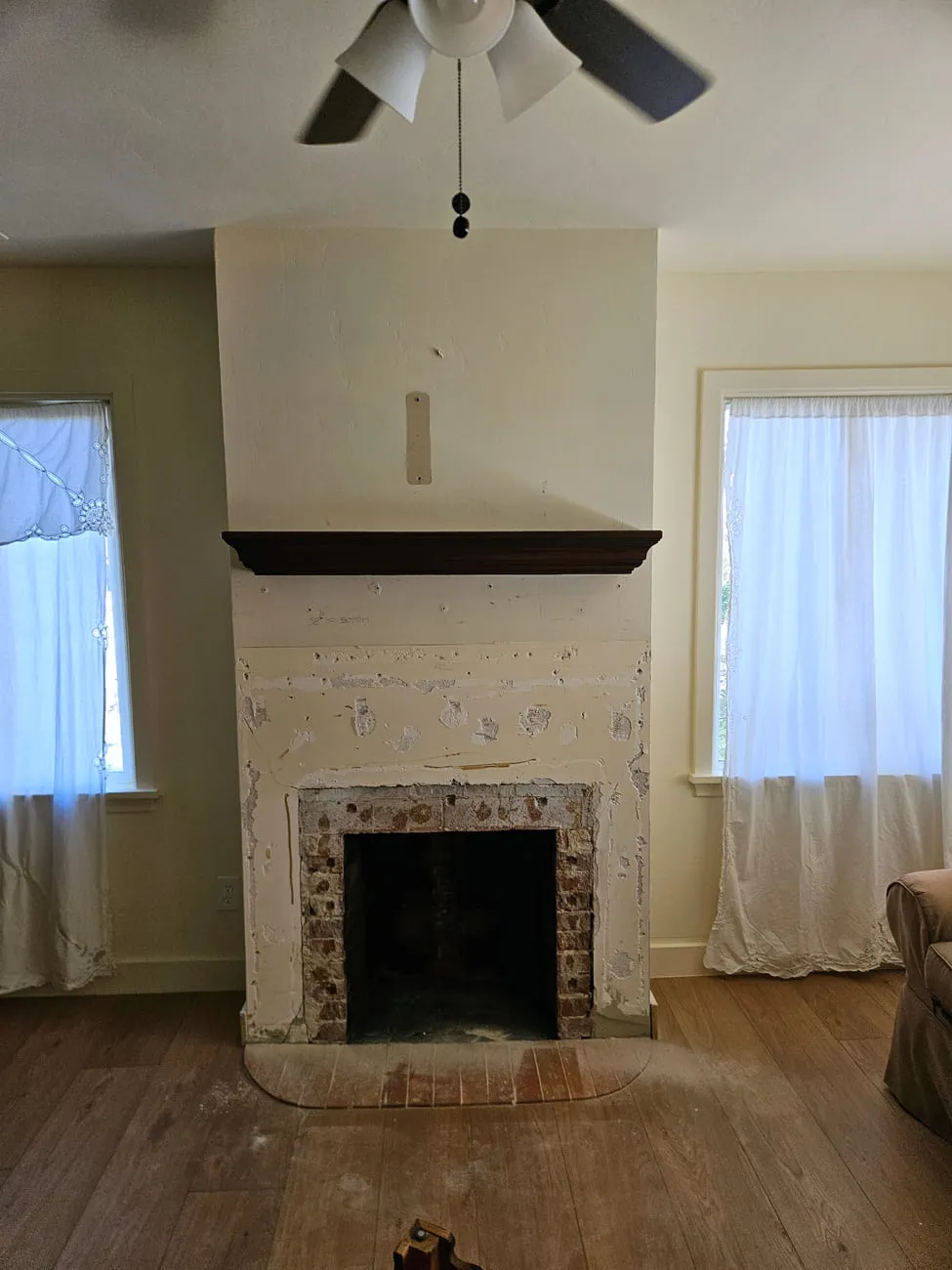 2. Mantel set
Mantel in and anchored, plaster patches still raw. Unglamorous, and the stage that decides whether the finished thing is solid.
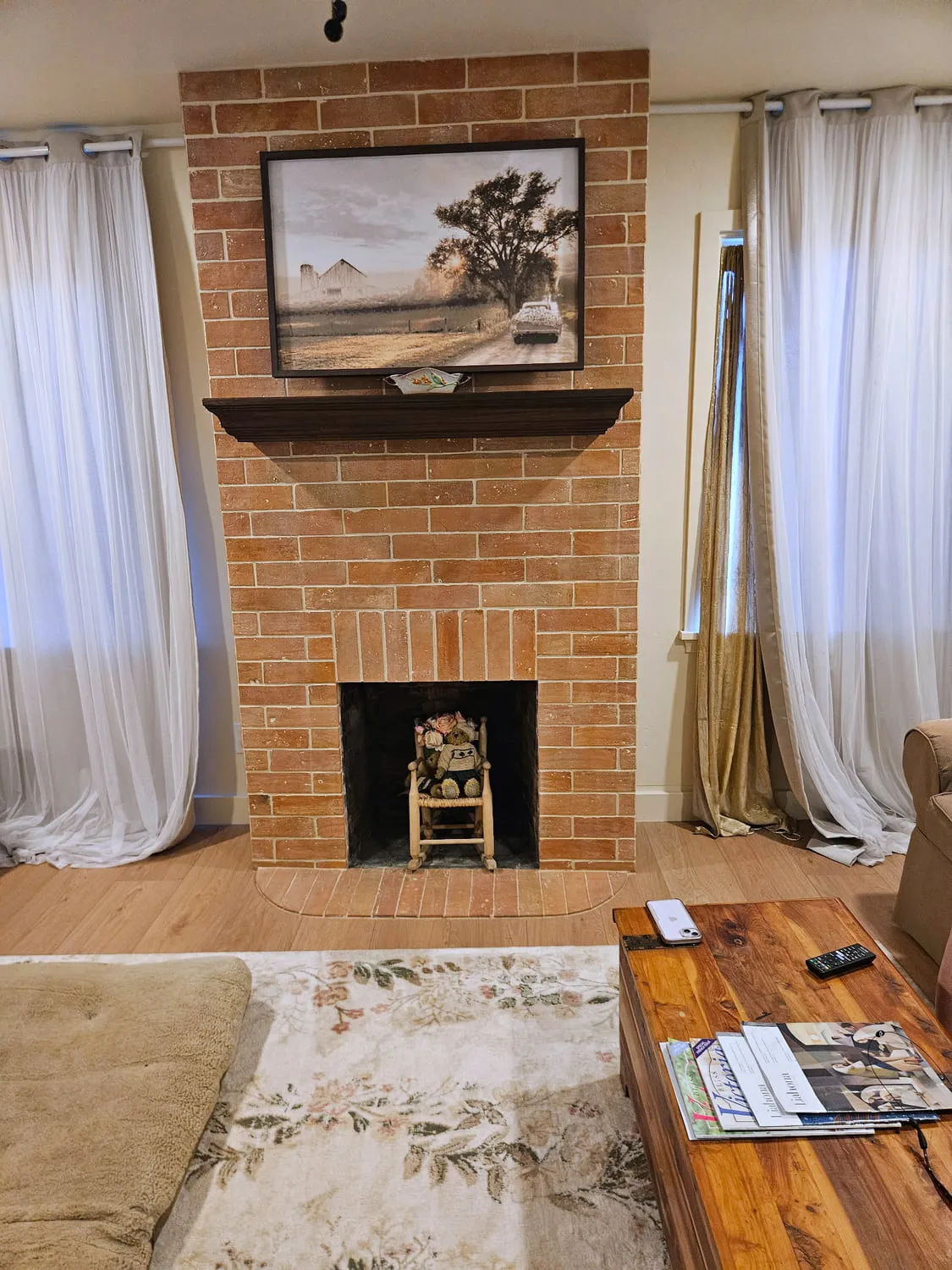 3. Finished
Full-height thin-brick surround and hearth, built around the mantel.
Anchoring comes before cladding
A mantel is a cantilever. A heavy piece of timber sticking out of a wall with nothing under it has to be held by something structural, and veneer is not structural — thin brick is a facing, roughly half an inch thick, bonded to the wall behind it.
So the order is fixed: find or add solid backing, anchor the mantel to it, then clad around it. Reverse that and the options get much worse — either the brick comes back off, or the mantel gets held by fasteners into a facing that was never meant to carry it.
That is why the middle photograph, which is the least attractive of the three, is the one that matters.
Plaster, not drywall
This is an older house, and the walls are plaster. Plaster is harder and more brittle than drywall, and a thick single coat of drywall compound over a plaster repair will craze and telegraph through the paint within a season.
The patches here were built up in thinner coats and bonded properly to what was already there. Old houses in Hurricane, LaVerkin and old-town St. George frequently need this, and it is a different skill from patching modern board.
The trades in this job
Tell me what needs doing.
Describe the job and send a photo if you have one. The person who reads it is the person who will do the work.