Backyard patio, steps and walkway — formed, poured and finished
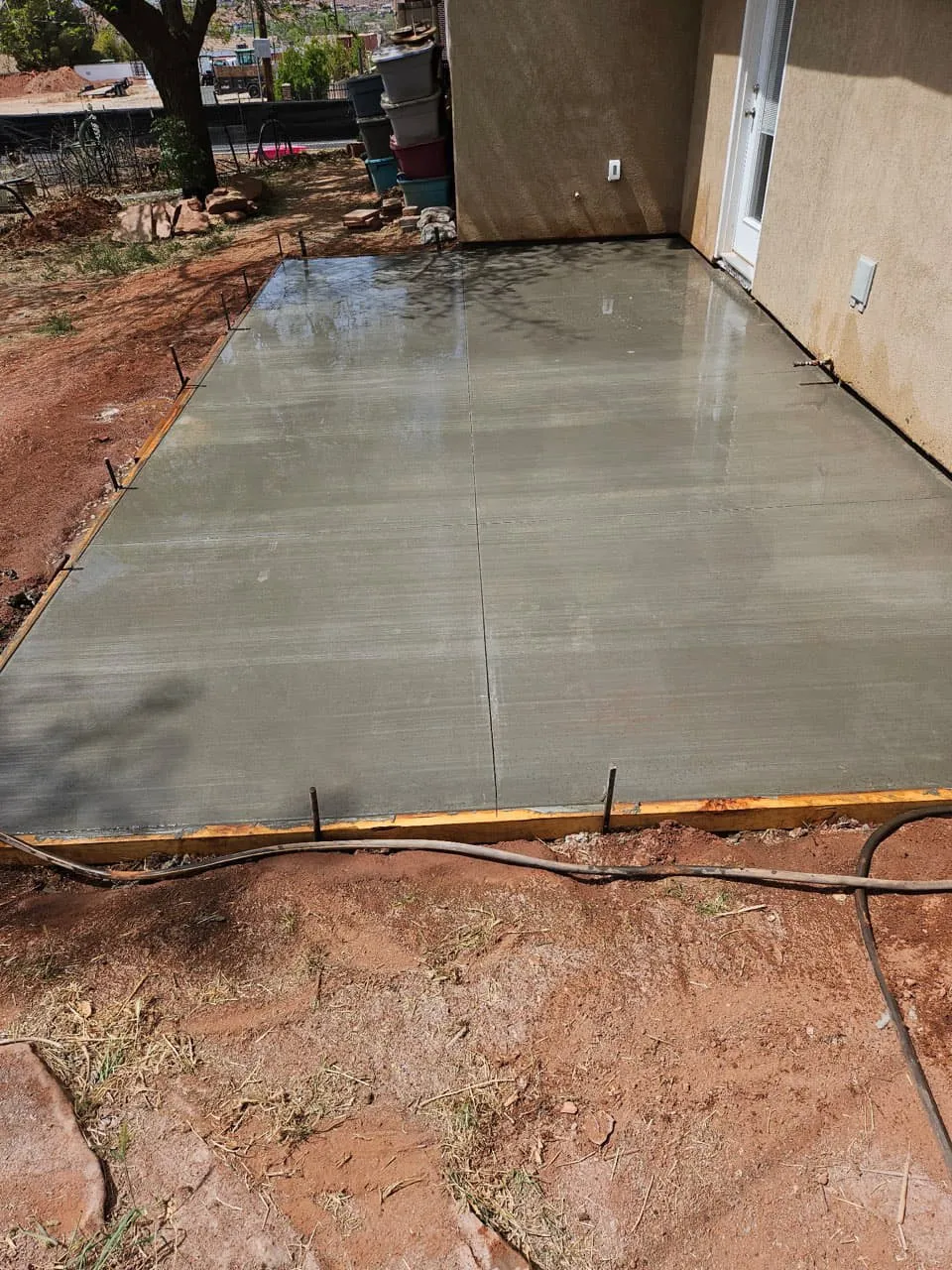
This backyard in Washington County, Utah went from formed and staked subgrade to a finished patio, steps and walkway. Everything visible in the finished concrete — whether the edges are crisp, whether the radius corner is a true arc or a series of flats, whether water runs off or ponds — was decided before any concrete arrived, during the forming and grading. Flatwork fails from underneath, not from the top.
Before and after
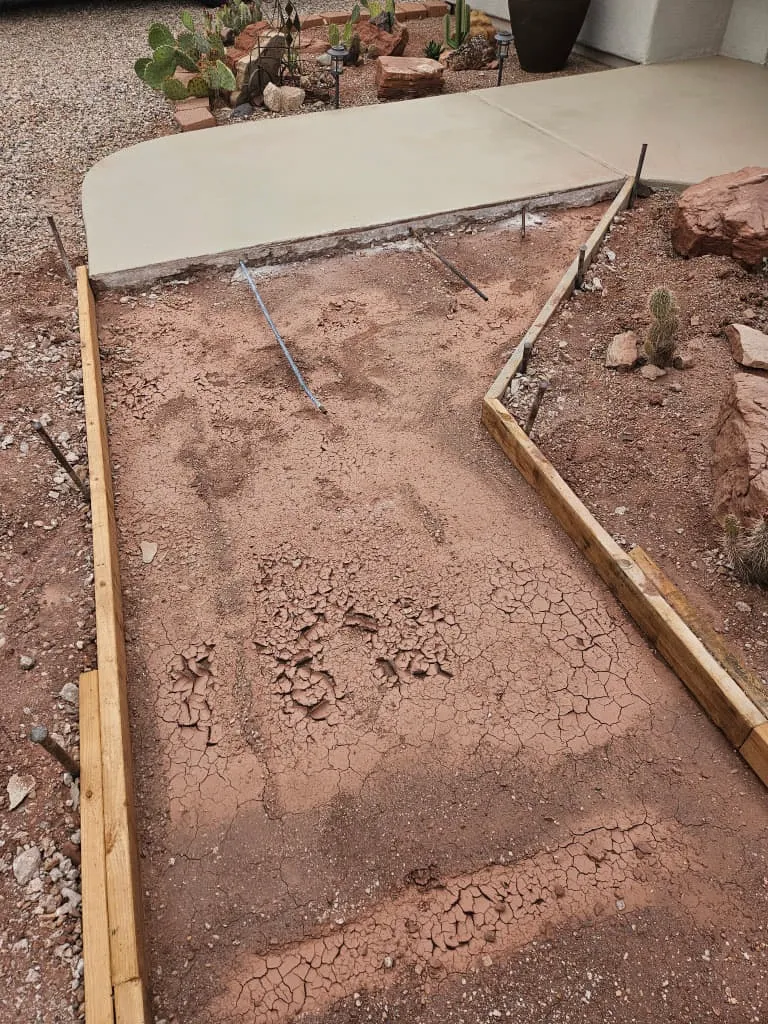 Formed
Forms set and staked on cracked red clay, butting the existing slab. The dull stage that decides the finished result.
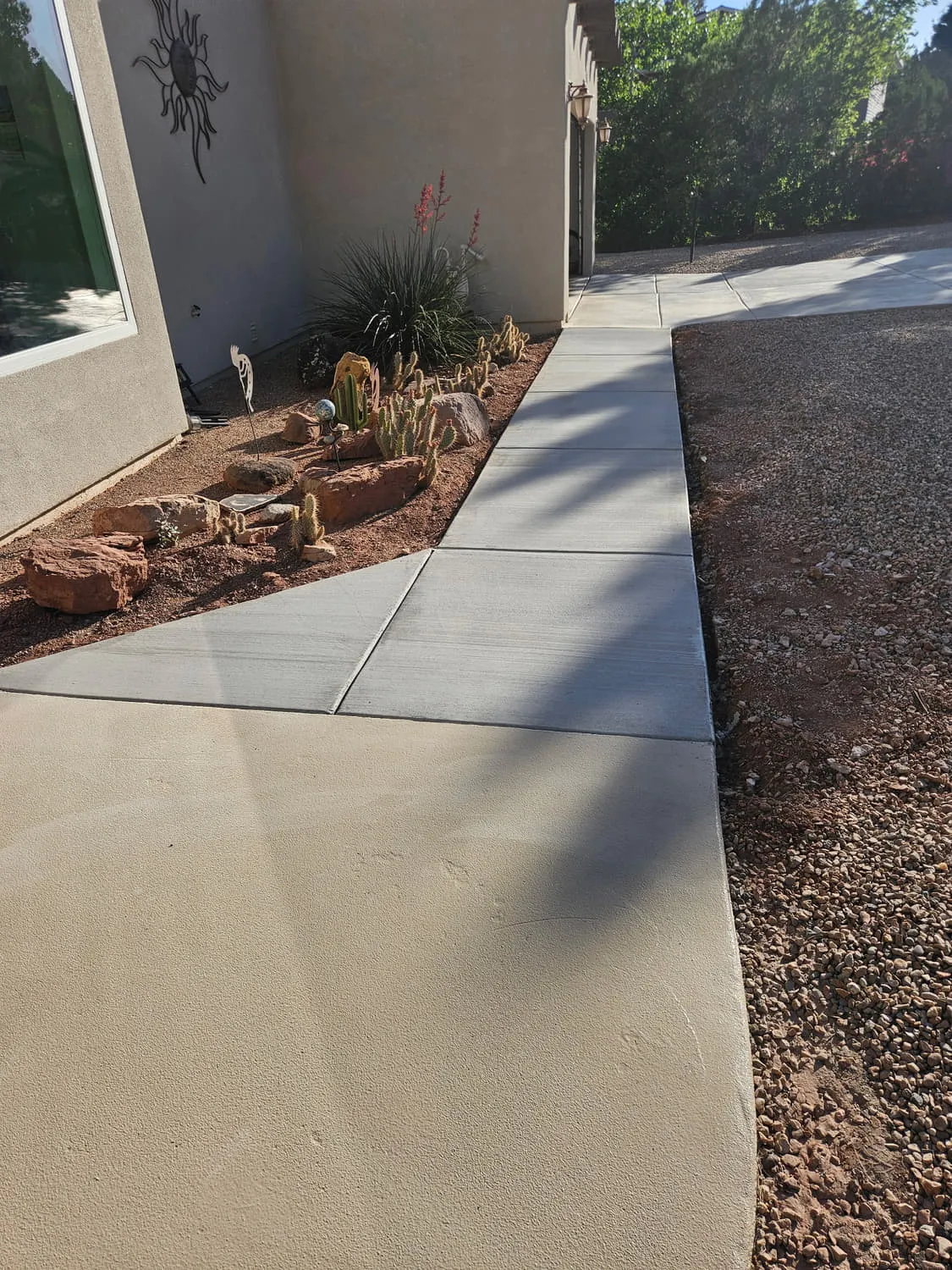 Finished
Tooled edges, cut control joints, and a radius corner that is a genuine arc.
Separated from the existing slab, not bonded to it
The first photograph shows new forms butting an existing slab. The two are deliberately separated rather than tied together, because they will move independently — different age, different thickness, different ground underneath.
Poured tight against each other with no joint to absorb that movement, one or both of them cracks at the junction. It is one of the most common reasons an otherwise well-finished addition to existing flatwork fails within a couple of years.
Control joints are a decision, not a formality
Concrete shrinks while it cures. It will crack. The work is deciding where.
Control joints — cut or tooled at sensible spacing — create a planned weak plane so the slab cracks along a straight line below the surface instead of wandering across the finished face. Their spacing is a function of slab thickness and shape, not a matter of taste, and getting it wrong is what produces a slab with a random crack across the middle of it.
Radius corners
The walkway corner in the second photograph is a real arc. Getting there means kerfing or bending the form rather than approximating the curve with three short straight segments, and then tooling the edge round so it resists chipping.
It takes longer and it is the single clearest tell of whether flatwork was formed carefully or quickly.
The heat sets the clock
On this ground, in this climate, a summer pour starts early. St. George runs past 100°F routinely from June into September, and hot concrete gives its water to the air instead of using it to hydrate — which crazes the surface and leaves the slab weaker than the mix design promised. Early placement, a cool mix, and wet curing are not caution, they are the accepted practice for these conditions.
More from this job
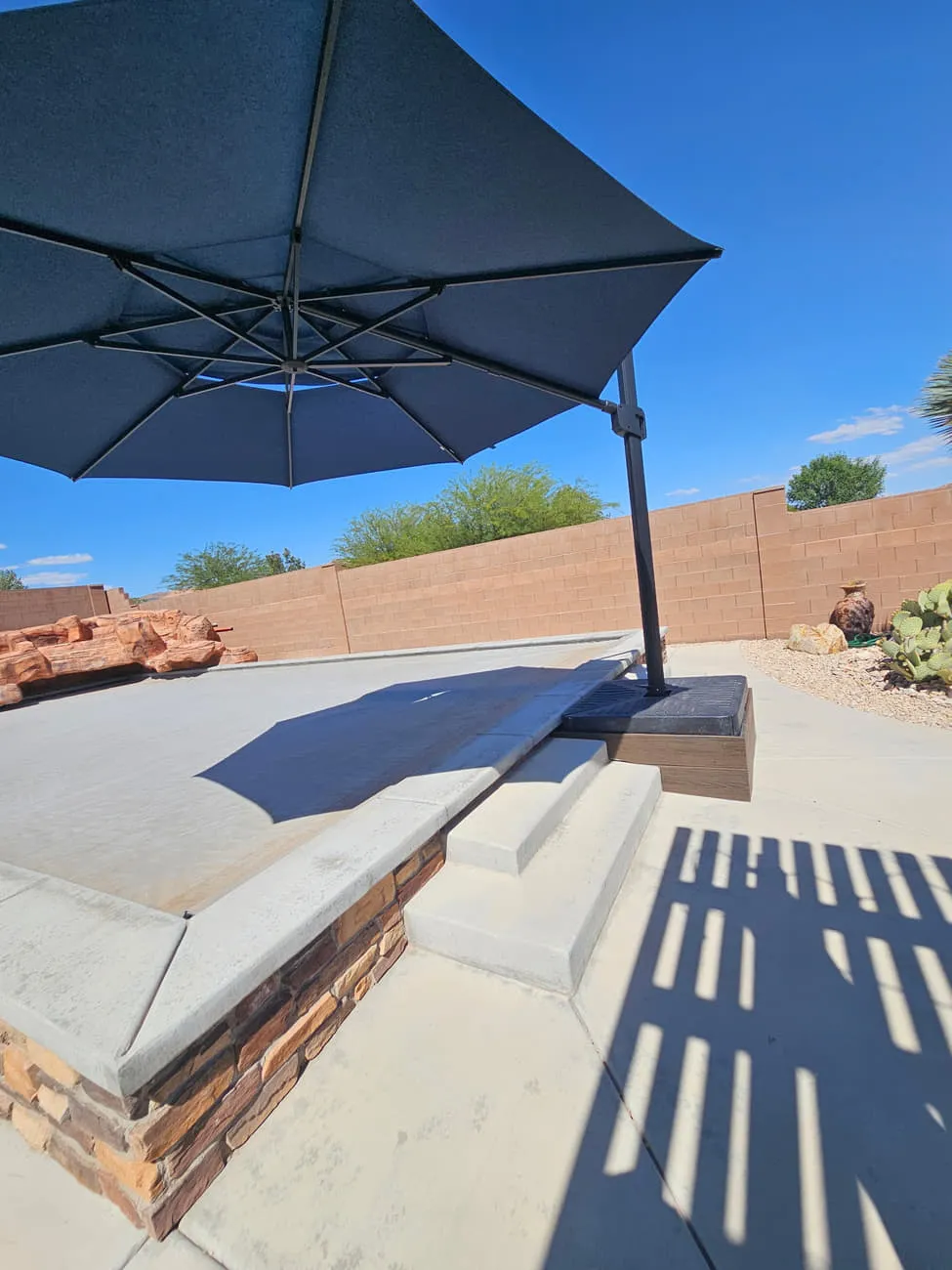
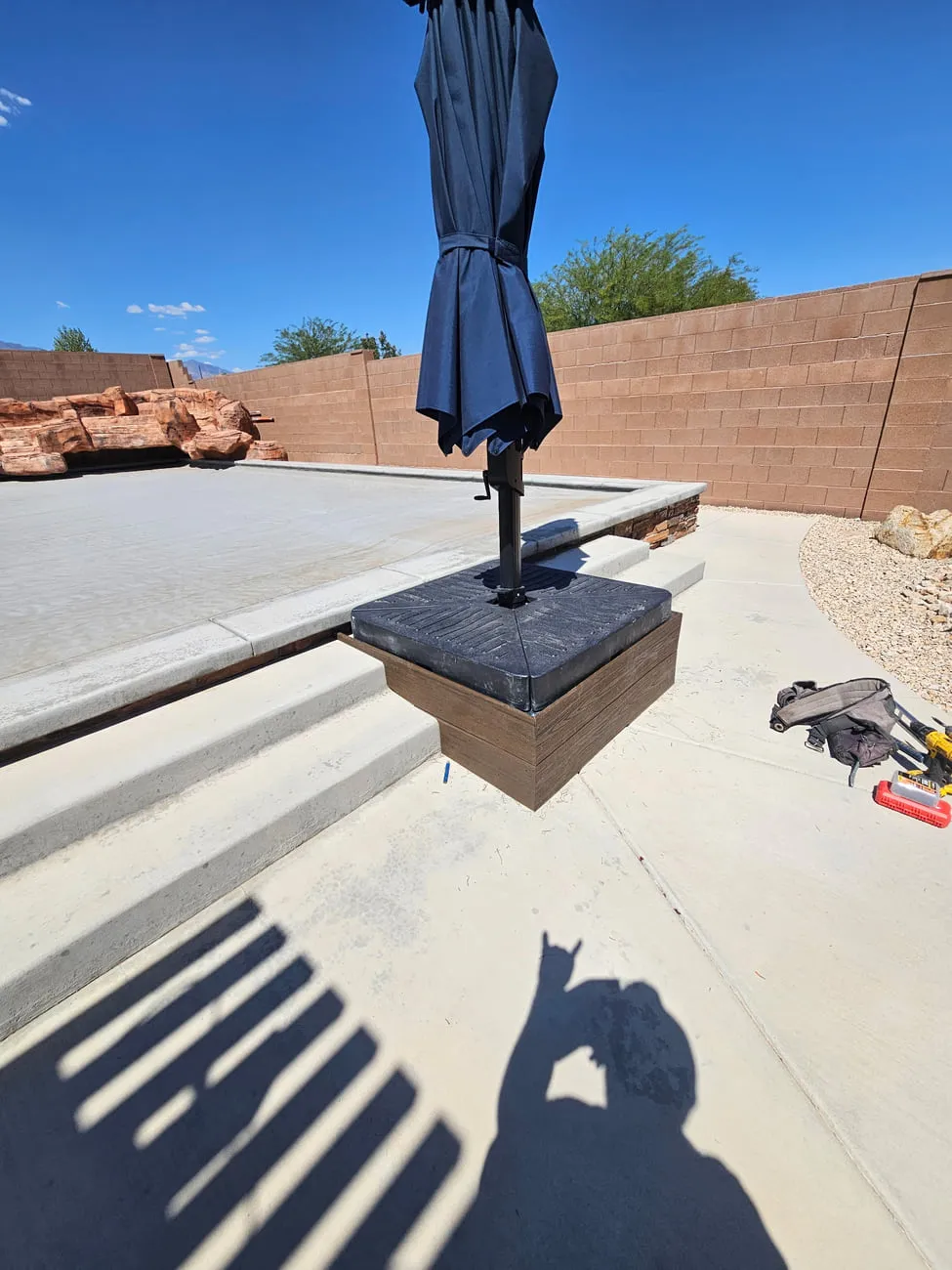
The trades in this job
Tell me what needs doing.
Describe the job and send a photo if you have one. The person who reads it is the person who will do the work.