Great room floating shelves, flanking a stacked-stone fireplace
These three floating shelves were mounted either side of a floor-to-ceiling stacked-stone fireplace in a lived-in great room in Washington County, Utah. Floating shelves have no visible support, so all of the work is hidden: each one is carried by steel rods or a cleat let into the wall and driven into studs. The blue painter's tape in the first photograph is the actual design step — heights and spacing get agreed on the wall, at full size, before anything is drilled.
Before and after
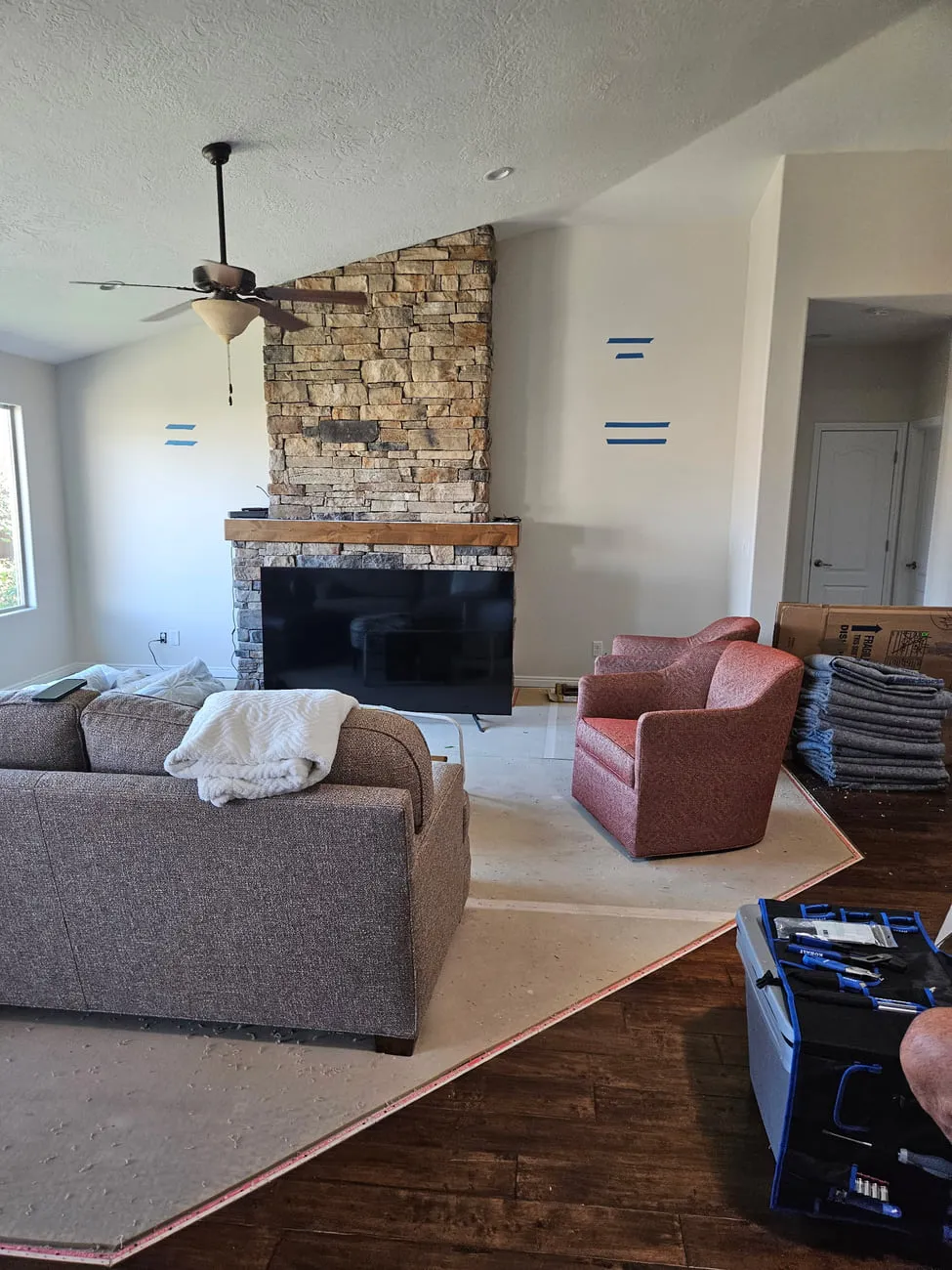 Laid out
Heights and spacing marked in tape and looked at from the sofa before anything is drilled.
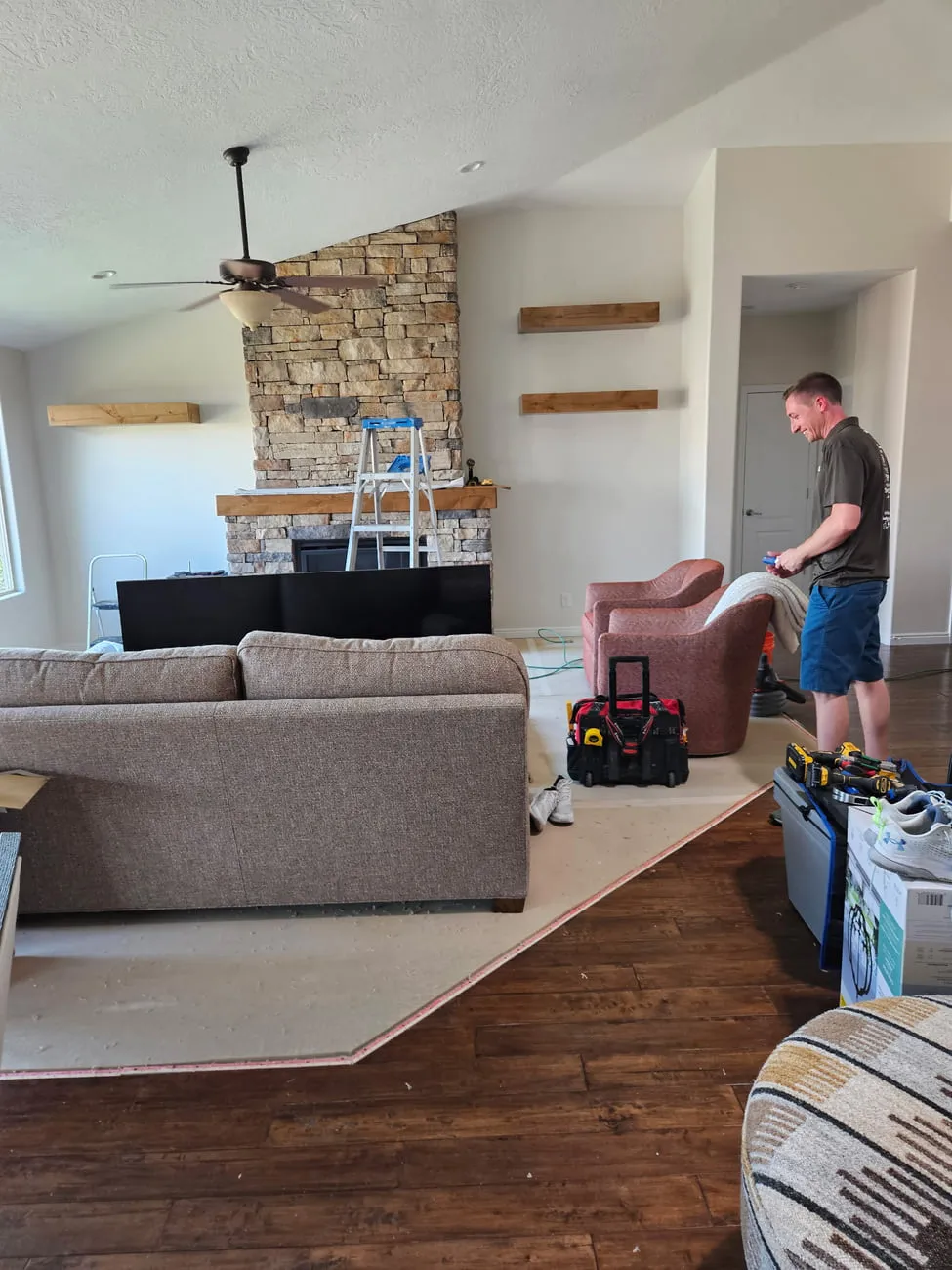 Installed
Three shelves in, exactly where the tape was.
Tape first
The tape is not a formality. Shelf height is one of those decisions that looks obvious on paper and wrong on the wall — a couple of inches changes whether the shelves relate to the mantel, the window heads and the eye level of someone sitting down.
So the layout goes up full size, in tape, and gets looked at from where people actually sit. Then it gets drilled.
What holds a floating shelf up
Nothing visible, which is the whole point and also the entire difficulty. A floating shelf is a cantilever, and the load path has to be real:
- Steel rod or a let-in cleat in the back of the shelf, driven into studs.
- Studs, not drywall. No anchor rated for drywall alone will hold a loaded shelf of this depth over time — it will hold it long enough to look fine and then sag.
- Blocking added where the studs do not fall where the shelves need to go, which means opening the wall before the shelves rather than after.
Depth is what makes this unforgiving. A shallow shelf forgives a mediocre attachment. A deep one multiplies every pound on it into leverage at the wall.
Matching the existing timber
The stain here was matched to the mantel beam already in the room, not chosen from a chart. Matching to something in place means test pieces in the room’s own light, because the same stain on the same species reads differently under the warm lighting in a great room than it does in a garage.
More from this job
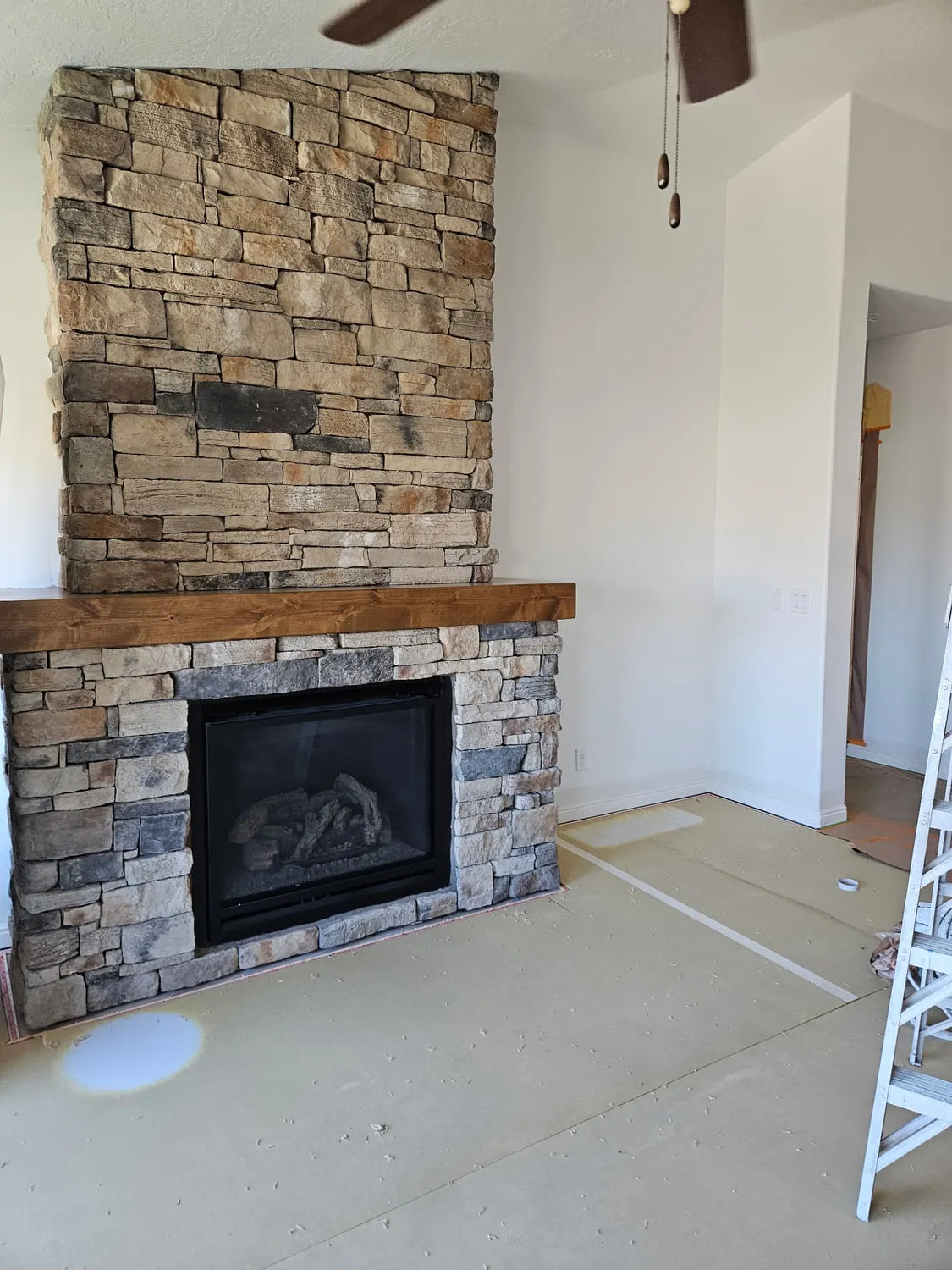
The trades in this job
Tell me what needs doing.
Describe the job and send a photo if you have one. The person who reads it is the person who will do the work.